
Begin with the promise
You can use this before Christmas whether or not your church follows an Advent calendar. Read Luke 1:26–38 beforehand. Keep the aim beside your materials; an elaborate craft is optional.
Gather the children and ask: “What does it mean when someone makes a promise?” Hear a few answers. Explain that today’s reading contains a particular promise from God about Jesus. It does not mean God has promised everything we might wish for.
Read Luke 1:26–38 together
Give the reference and help children find it. Read the whole passage aloud while they listen or follow. Introduce Gabriel as God’s messenger and Mary as the woman he visits. Then retrace the reading with this path.
Luke 1:26–30
The messenger
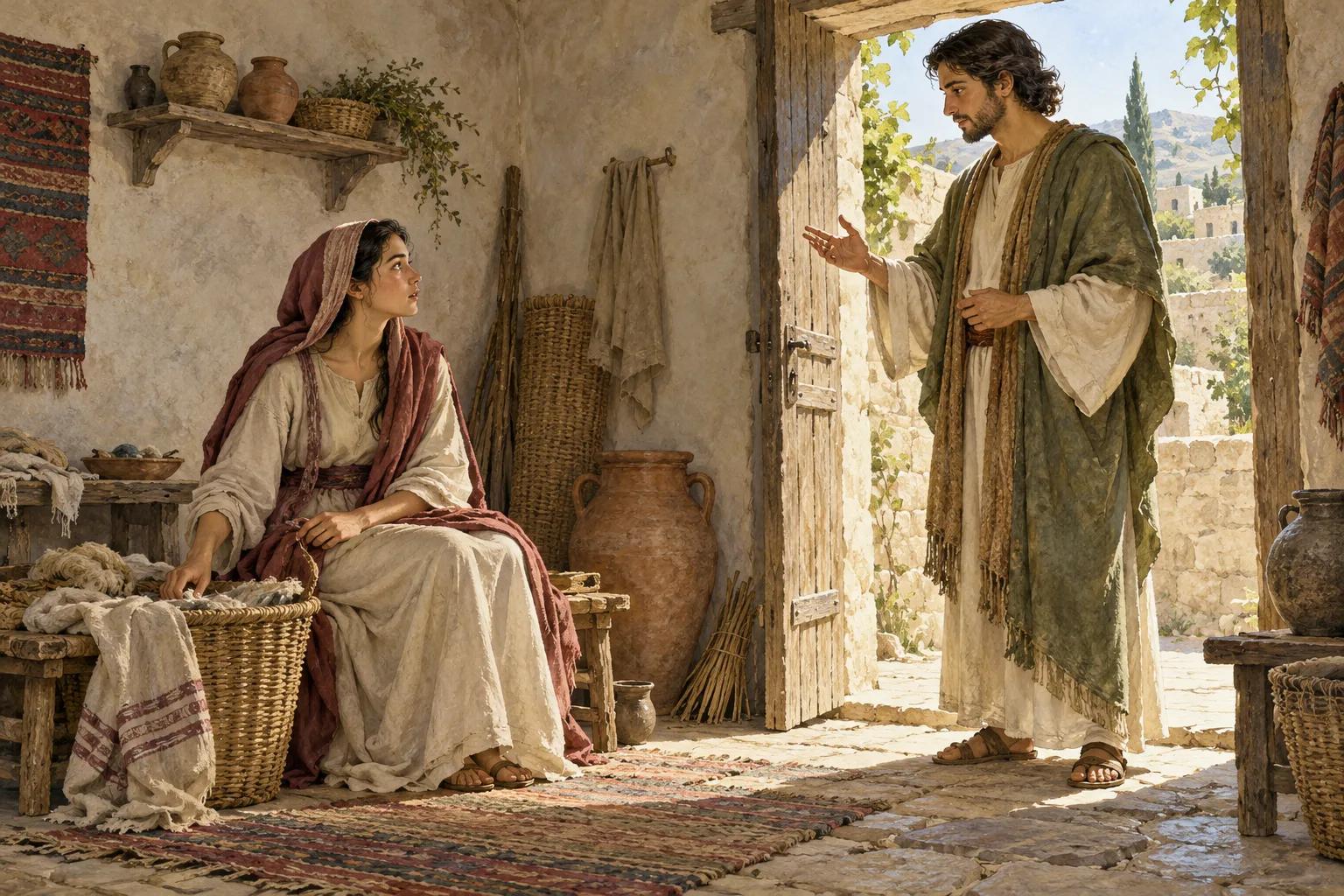
God sends Gabriel to Mary in Nazareth. Mary is troubled by his greeting.
Luke 1:31–33
The promised King
Her son will be named Jesus. God will give him David’s throne; his kingdom will never end.
Luke 1:34–38
God’s power; Mary’s reply
Gabriel explains the Holy Spirit’s work. Mary receives God’s word as his servant.
Explain that David was a king of Israel long before Mary lived. God had promised a lasting royal line to David (2 Samuel 7:12–16). A throne stands for a king’s rule. Jesus is the promised King and the Son of God. The eternal Son became human; John 1:1–3, 14 helps the teacher explain this.
Ask, then return to the words
Pause after each question. Let children point to the verse, answer aloud or ask you to read it again. You can close the teacher notes while practicing the questions.
Verse 31What name is the child given?
Jesus. Ask someone to find his name rather than guessing from the Christmas decorations.
If needed: reread verse 31 and invite everyone to listen for a name.
Verses 32–33What does Gabriel say about his kingdom?
It will never end. Explain kingdom as a king’s rule; this promise reaches beyond one Christmas.
If needed: ask whether the verse gives Jesus a date when his reign stops.
Verses 26, 32Who sends the message and gives Jesus the throne?
God. Gabriel carries the message; he is not the one making this promise.
If needed: revisit who sent Gabriel, then who gives the throne.
A crown with an explanation
Give each child paper. Draw a crown beside Luke 1:31–33, or offer an outline to color. Children can point, speak or draw, with adult help where needed. These are choices for everyone, not ability groups. Ask each willing child to explain what the crown tells us about Jesus. Help connect an answer about royalty to his never-ending reign.
My reading sheet
Luke 1:31–33
Draw or trace a crown here.
What does it tell us about Jesus?
Finish by thanking God
Put the drawings beside the open Bible. Ask: “What did we learn about Jesus?” Welcome an unfinished answer and return to the passage. Invite children to join this suggested prayer or listen quietly:
Father, thank you for sending Jesus, your Son and our King. Thank you that his kingdom will never end. Help us listen to your word and trust you. Amen.
If you teach again before Christmas
Choose what fits your church’s teaching plan and read each passage in full.
- Matthew 1:18–25Joseph hears
- Notice why the child is named Jesus: he will save his people from their sins.
- Luke 2:1–7Jesus is born
- Follow the journey to Bethlehem and the birth. Keep details grounded in Luke’s account.
- Luke 2:8–20The shepherds hear
- Notice how Jesus is named and how the shepherds respond to the news.
Pastorly makes a Sunday School lesson from Sunday’s sermon.
Sources
- Luke 1, World English Bible
Verses 26–38 recount Gabriel’s announcement to Mary about Jesus.
- 2 Samuel 7, World English Bible
Verses 12–16 provide the background to the promise of David’s throne.
- John 1, World English Bible
Verses 1–3 and 14 distinguish the eternal Word’s identity from his becoming human.
- Matthew 1, World English Bible
Verses 18–25 recount Joseph’s dream and the naming of Jesus.
- Luke 2, World English Bible
Verses 1–20 recount Jesus’ birth and the shepherds’ visit.