

There may be people like that in your congregation each week. Some are exploring Christianity. Others have attended church for years without much help reading Scripture. A few careful explanations can give them a place to begin.
In NCLS Research’s December 2022 survey of 3,090 Australians, 23% described themselves as having limited familiarity with Christian teaching and values. About another fifth reported little or none. In Lifeway Research’s August 2024 survey of 1,200 U.S. adults, 12% said they had read only a few sentences of the Bible and 9% none of it. We cannot assume familiarity simply because someone has come through the church door.
Help people find the passage
Give the page number for the Bibles your church provides, alongside the chapter and verse. Allow time for someone to find it. Explain what they are about to read: a letter to a church, a poem addressed to God, or an account of Jesus’ life.
For Mark 2:1–12, you might begin:
“Mark is one of the four Gospel accounts of Jesus’ life. Jesus is teaching in a crowded house. As we read, listen for the disagreement about what he has the authority to do.”
That gives everyone a question to listen for. Other details can wait until they become important to the reading.
If the sermon takes people to another passage, explain why you are going there before they turn the page. Give them time to find it, and make the connection with the original reading clear.
Stay with the question in the passage
Four people lower a paralyzed man through the roof. Jesus tells him his sins are forgiven. The scribes silently object to his claim to forgive sins. Jesus then heals the man to demonstrate his authority. It is possible to remember the roof and miss that connection.
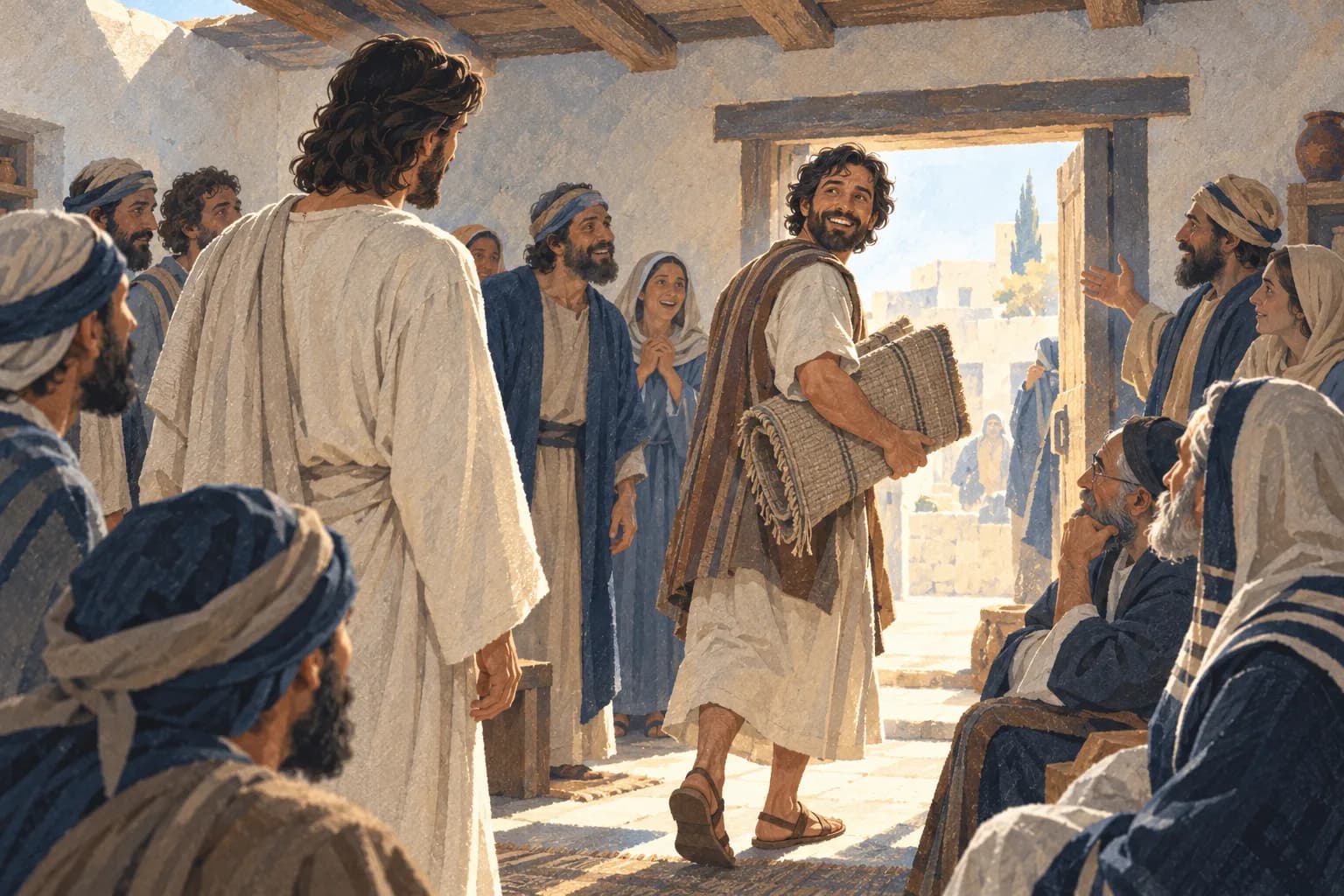
The scribes are teachers of the Jewish Scriptures. Their question is serious: who can forgive sins but God alone? Mark lets us hear their thoughts before Jesus answers them. A brief explanation helps listeners understand why this matters.
“Sin” may need explaining too. Someone can recognize dishonesty or cruelty while having little idea what Christians mean by sin against God. You might explain that it includes the wrong we do and our failure to give God the trust and obedience he deserves.
For someone new to church, “forgiveness” can mean overlooking a wrong. Here Jesus is announcing God’s pardon. Explain that claim before asking listeners to respond, so they understand what you are inviting them to trust him for.
When Jesus calls himself the “Son of Man”, tell listeners he is speaking about himself. Read verses 10–11 again and show how the healing demonstrates his authority to forgive. Keep the passage open so people can follow his explanation.
Keep your application within what Mark tells us. He does not say that a particular sin caused the man’s paralysis. Do not suggest otherwise.
Mark says Jesus saw “their faith” in verse 5. The people carrying the man are determined to reach him, but a sermon that finishes with “be a better friend” has left Jesus’ claim unexplained. What does his authority mean for the congregation’s own need of forgiveness?
Find the places where people get lost
Read your sermon aloud. Notice names you introduce without explanation and conclusions that depend on another passage you have not shown the congregation. Ask a trusted reader to mark the first sentence they find unclear. Give them permission to ask about words you use every Sunday.
“Where did you stop following me?” gives them something more useful to answer than “Was that clear?” Listen to the answer before explaining what you meant. Their difficulty may show you where a sentence needs work.
Phrases such as “as we all know” can make a person reluctant to ask. Explain unfamiliar words to the whole room without singling anyone out.
If you use slides, keep the relevant verses visible while you explain them. A picture of the roof helps people imagine the scene; the words help them follow what Jesus says. Check that both serve the sermon you are actually preaching.
Give people a way to keep reading
Invite the congregation to reread these twelve verses during the week. Ask why the scribes object and what the healing helps the witnesses understand. Tell people whom they can speak to with a question.
You might make the invitation quite ordinary: “If you would like to read this with someone, speak to me after the service. We can find a time.” If someone does, offer a time before they leave.
Sources
- NCLS Research, Australians’ familiarity with Christianity
The December 2022 Australian Community Survey of 3,090 people about familiarity with Christian teaching and values.
- World English Bible, Mark 2:1–12
Mark 2:1–12, the passage used in the preaching example.
- Lifeway Research, American Views on Bible Reading
An August 2024 U.S. survey of 1,200 adults about how much of the Bible they have personally read.